




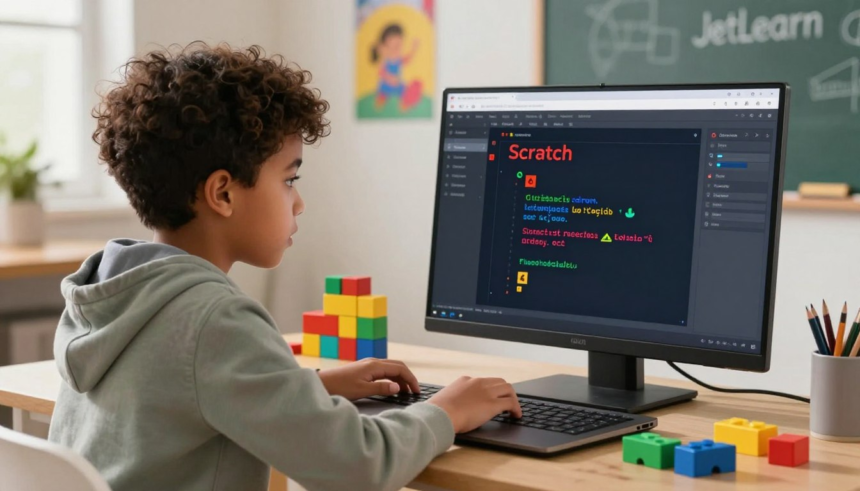
Learning programming from scratch can feel like standing in front of a huge mountain without knowing where the path begins. You may hear words like Python, JavaScript, loops, variables, or algorithms and think it is only for experts. But the truth is simple: programming is a skill that anyone can learn step by step, just like learning a new language or learning to drive. You don’t need a special background in math or science. You only need patience, consistency, and the right approach.
- Understanding What Programming Really Is
- Step 1: Start with the Right Mindset
- Step 2: Choose a Beginner-Friendly Programming Language
- Step 3: Learn the Basics First
- Step 4: Practice Every Day
- Step 5: Learn by Doing Small Projects
- Step 6: Learn How to Search for Solutions
- Step 7: Understand Debugging (Fixing Errors)
- Step 8: Learn Slowly, Not Quickly
- Step 9: Use Free Learning Resources
- Step 10: Stay Consistent and Patient
- Final Thoughts
- 1. How long does it take to learn programming from scratch?
- 2. Do I need strong math skills to learn programming?
- 3. Which programming language should I learn first?
- 4. Can I learn programming on my own?
- 5. What is the biggest mistake beginners make?
In this article, we will explore how to learn programming from scratch in a simple, human way. You will understand where to start, what to avoid, and how to build your skills without feeling overwhelmed.
Understanding What Programming Really Is
Before jumping into learning, it is important to understand what programming actually means. Programming is simply giving instructions to a computer so it can perform tasks. These instructions are written in a language that the computer understands, such as Python, JavaScript, or C++.
Think of it like giving a recipe to someone who is cooking. If the steps are clear, the result will be correct. If the steps are confusing, the dish will fail. In the same way, computers follow instructions exactly as written.
Programming is not about memorizing everything. It is about learning how to think in a logical way and solving problems step by step.
Step 1: Start with the Right Mindset
The first step in learning programming from scratch is not coding—it is mindset. Many beginners quit early because they expect quick results. Programming takes time.
You should accept these truths:
- You will make mistakes, and that is normal
- You will get confused sometimes
- You will need to practice daily
- You don’t need to know everything at once
Think of programming like learning to ride a bicycle. At first, you may fall, but with practice, balance becomes natural.
If you stay consistent and patient, you will improve faster than you think.
Step 2: Choose a Beginner-Friendly Programming Language
When starting from scratch, choosing the right language is very important. Some languages are easier for beginners because they are simple and readable.
A good starting option is:
- Python: Very easy to read and widely used
- JavaScript: Great for web development
- Scratch: Visual programming for absolute beginners
If you are completely new, Python is often recommended because its syntax looks like English. For example:
print("Hello World")This simplicity helps beginners focus on logic instead of complex rules.
Step 3: Learn the Basics First
Do not rush into advanced topics. Start with the basic building blocks of programming:
- Variables (storing data)
- Data types (numbers, text, etc.)
- Conditions (if-else statements)
- Loops (repeating actions)
- Functions (reusable blocks of code)
These are the foundation of all programming languages. Once you understand them, everything else becomes easier.
For example, a simple condition looks like this:
if age > 18:
    print("You are an adult")
This teaches the computer how to make decisions.
Step 4: Practice Every Day
Programming is not something you learn by only watching videos or reading articles. You must practice.
Even 30 minutes daily is enough in the beginning. The key is consistency.
Try doing small exercises like:
- Printing patterns
- Creating simple calculators
- Writing a program that asks for your name and greets you
- Solving beginner coding challenges
At first, you may feel slow, but with time, your thinking will become faster and clearer.
Step 5: Learn by Doing Small Projects
Once you understand the basics, start building small projects. Projects help you connect all your knowledge.
Here are some beginner project ideas:
- To-do list app
- Simple calculator
- Number guessing game
- Basic website using HTML and CSS
- Temperature converter
Projects are important because they show you how real programming works. You will face problems, search for solutions, and learn deeply.
Step 6: Learn How to Search for Solutions
Even professional programmers do not memorize everything. They use Google, documentation, and online communities.
One of the most important skills in programming is learning how to search for answers.
For example, instead of asking “I don’t understand loops,” you can search:
- “Python for loop examples”
- “How to use loops in beginner programming”
This skill saves time and helps you become independent.
Step 7: Understand Debugging (Fixing Errors)
Errors are part of programming. When you write code, it may not always work. This is normal.
Debugging means finding and fixing mistakes in your code. Instead of feeling frustrated, think of errors as clues.
For example, if your program does not run, check:
- Did you miss a colon or bracket?
- Is the spelling correct?
- Are you following proper syntax?
Over time, you will start recognizing errors quickly.
Step 8: Learn Slowly, Not Quickly
Many beginners try to learn everything in one week. This leads to confusion and burnout. Programming is a long-term skill.
Instead of rushing, focus on understanding one topic at a time. For example:
- Week 1: Variables and data types
- Week 2: Conditions
- Week 3: Loops
- Week 4: Functions
Slow learning is actually faster in the long run because it builds strong foundations.
Step 9: Use Free Learning Resources
There are many free resources available online:
- YouTube tutorials
- Free coding websites
- Beginner courses
- Documentation pages
The internet has made learning programming easier than ever. You don’t need expensive classes to start.
However, make sure you follow one path instead of jumping between too many resources.
Step 10: Stay Consistent and Patient
Consistency is the real secret to learning programming from scratch. Even 1 hour daily is more powerful than 10 hours once a week.
There will be days when you feel stuck or unmotivated. That is normal. What matters is continuing anyway.
After a few weeks, you will notice improvement. After a few months, you will be able to build real projects.
Final Thoughts
Learning programming from scratch is not about talent. It is about practice, patience, and curiosity. Everyone starts as a beginner. Even expert developers once struggled with their first “Hello World” program.
If you follow the right steps—starting small, practicing daily, building projects, and staying consistent—you will slowly become confident in coding.
The journey may seem long, but every small step brings you closer to becoming a programmer. Keep going, stay curious, and enjoy the process.
FAQs
1. How long does it take to learn programming from scratch?
It depends on your consistency. On average, beginners can understand basic programming in 2 to 3 months with daily practice.
2. Do I need strong math skills to learn programming?
No, basic programming does not require advanced math. Logical thinking is more important than math skills.
3. Which programming language should I learn first?
Python is highly recommended for beginners because it is simple and easy to read.
4. Can I learn programming on my own?
Yes, many programmers are self-taught using free resources, videos, and practice projects.
5. What is the biggest mistake beginners make?
The biggest mistake is trying to learn everything too quickly instead of focusing on practice and basics.